The Museum of the Future is not a warehouse of old objects. It is an immersive journey into 2071, built around space travel, ecological repair, human wellbeing, emerging technology and children’s problem-solving. Tourists, families, students, design lovers and innovation teams should explore both the exhibitions and the building itself.
This guide covers the best things to do in Museum of the Future, what to prioritise and how to avoid common planning mistakes.
Ready to reserve a timed entry? Check current Museum of the Future ticket availability through Things To Do UAE and choose a slot that fits your Dubai itinerary.
| Plan Your Visit | Current Guidance |
|---|---|
| Hours | Daily, 10:00 AM–7:00 PM |
| Last admission | 5:00 PM |
| Standard entry | AED 169 for age 4+ |
| Visit length | Approximately 2–3 hours |
| Nearest Metro | Emirates Towers, Red Line |
Current prices and operating hours can change, so confirm them again when booking.
Why book with Things To Do UAE? The UAE-focused platform combines online ticket selection with practical attraction information and optional private transfer or tour add-ons.
Table of contents – Museum of the Future: living laboratory; architecture; floor-by-floor experiences; must-see highlights; sensory design; photography; visitor tips; dining; nearby attractions; value verdict.
Beyond the Artifacts: Why the Museum of the Future is a Living Laboratory
The experience combines exhibition design, immersive theatre and a themed attraction. Its practical question is simple: what choices made today could create a better future?
A Vision by Sheikh Mohammed Bin Rashid Al Maktoum
The Museum of the Future translates Sheikh Mohammed’s future-focused vision into a public experience. Its architecture, exhibitions and calligraphy reinforce the idea that innovation is something people can imagine, test and build.
Shifting from What Was to What Will Be
The strongest Museum of the Future experiences present possible futures rather than one fixed prediction. That makes the visit relevant to students, entrepreneurs, educators, international brands and anyone interested in technology’s social impact.
Marveling at the Architectural Mastery of the Torus
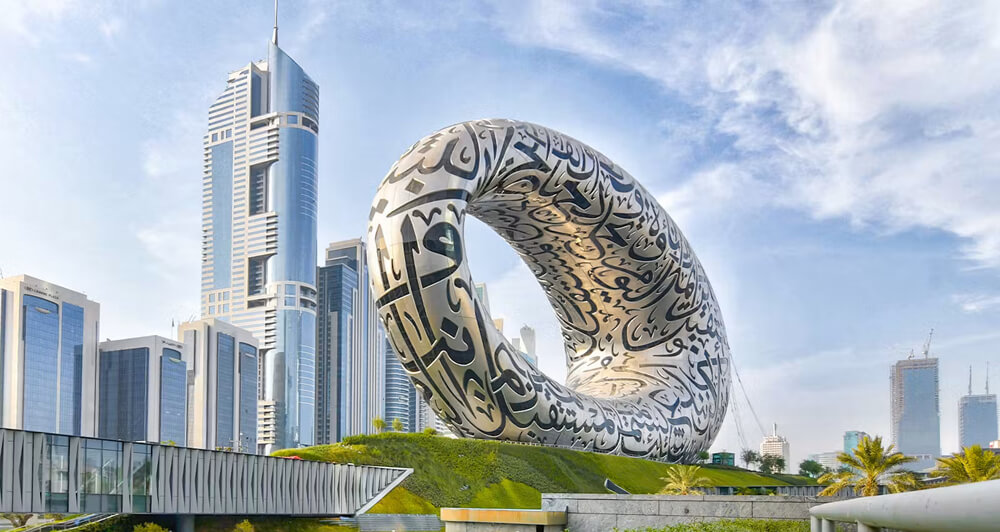
The 77-metre torus is a major Museum of the Future highlight. Its stainless-steel façade contains 1,024 robot-manufactured pieces covering approximately 17,600 square metres.
The Symbolism of the Void and the Calligraphy-Wrapped Facade
The green mound represents Earth, the circular structure represents humanity, and the central void represents knowledge still unknown. From inside, the void creates dramatic views and floods the building with natural light.
Mattar bin Lahej’s Script: Decoding the Wisdom on the Walls
Emirati artist Mattar bin Lahej transformed quotations by Sheikh Mohammed into flowing Arabic calligraphy. The lettering forms windows, filters daylight, and glows after sunset rather than functioning as surface decoration.
Engineering the Future: Killa Design and LEED Platinum Certification
Killa Design created the architectural concept, while Buro Happold engineered the complex structure. The LEED Platinum building receives 30% of its power from a nearby solar farm and recycles up to 70% of its wastewater.
The Immersive Journey: A Floor-by-Floor Breakdown
The self-guided route follows five main exhibition floors, with museum ambassadors available throughout the journey. Exhibitions evolve, so use this as a planning framework rather than a permanent inventory.
Level 5: OSS Hope Station and the Future of Space Travel
OSS Hope is a fictional station 600 kilometres above Earth. Panoramic media and mission storytelling explore how lunar resources and space-based systems might support life on our planet.
Level 4: The Heal Institute and the Digital Amazon Rainforest
A mixed-reality Amazon reveals ecological relationships normally hidden from view. The DNA Library presents thousands of species while asking how humanity could repair environmental and climate damage.
Level 3: Al Waha – A Sensory Sanctuary for Human Wellness
Al Waha means “the oasis.” This quieter chapter uses movement, sound, water and meditation to help visitors reconnect with their senses after the information-rich upper floors.
Level 2: Tomorrow Today – Witnessing Near-Future Technologies
Tomorrow Today showcases technologies being developed now, including concepts addressing mobility, energy, health, food, water and environmental resilience. The exhibition is designed to change as innovations emerge.
Level 1: Future Heroes – Mission-Based Learning for Kids
Future Heroes turns learning into screen-free play. Children complete “Imagine, Design and Build” activities and time-limited missions encouraging collaboration, communication and creativity.
Top Can't-Miss Highlights for Your Itinerary
Pressed for time? Prioritise OSS Hope, the DNA Library, Al Waha, Tomorrow Today and the viewing deck for the best mix of spectacle, learning and photography.
Boarding the Drop Pod: The Ultimate Elevator Experience
The “Drop Pod” uses screens, sound and motion to frame the ascent as a launch towards OSS Hope. Face the media walls rather than the doors to experience the complete transition.
Exploring the DNA Library (The Vault of Life)
Rows of illuminated specimens make the library one of the best things to see in the Museum of the Future. Its deeper message is collective responsibility for protecting interconnected life.
The Make A Wish Pool: Meditative Reflection in Al Waha
Pause here, put the phone away, and make a private wish for the future. The surrounding light, water, and sound design work best when experienced without rushing.
Interacting with the RoboDog and Flying Robot Dolphin
Robotic characters have appeared in the lobby, including a RoboDog and floating animal-inspired machines. Availability changes, so treat them as a bonus and ask staff where current robot interactions are taking place.
The Sensory Experience: Olfactory and Visual Storytelling
The Museum of the Future Dubai experience uses spatial transitions, sound, light, movement, and selected scents to make each chapter feel distinct.
The Scent of the Future: Why Every Floor Smells Different
Specially developed fragrances support the museum’s world-building. However, “every floor has a different scent” is better treated as a design principle than a guaranteed visitor checklist; fragrance is used selectively to strengthen mood and memory.
Immersive Soundscapes and the Flame Tree Season
Sound controls pace and emotion, from the OSS Hope ascent to Al Waha’s calmer atmosphere. Flame Tree Season is limited cultural programming rather than a permanent core exhibition, so check the current events calendar first.
Strategic Photography: Capturing the Most Iconic Angles
Personal photography is generally allowed using available light. Flash, tripods, and selfie sticks are prohibited, while special galleries may impose additional restrictions.
Standing in the Void: The Viewing Deck Experience
Use a wide lens and leave space around your subject so the curved façade remains the visual hero. The void is the defining Museum of the Future photograph and offers panoramic architectural views.
The Atrium: A Masterclass in Futuristic Minimalism
Look upward for calligraphy-filtered light, white surfaces, and sweeping stairs. Low angles create scale, while centred framing produces striking symmetry.
Night Photography: The Calligraphy Panels and Sheikh Zayed Road
After sunset, the calligraphy glows against Sheikh Zayed Road’s towers. A night return is worthwhile for architecture-focused travellers who want a different exterior perspective.
Expert Tips for a Seamless Visit
Current opening hours are 10:00 AM–7:00 PM, with last admission at 5:00 PM. Entries are date and time specific, including visitors who qualify for free admission.
The Timed Entry Rule: Why You Must Book Weeks in Advance
Booking weeks ahead is not an official rule, but it is sensible for weekends, school holidays and fixed travel dates. Same-day tickets may be available, although preferred entry times are not guaranteed.
Arrive approximately 15 minutes early and keep the ticket accessible on your phone.
Navigating via the Dubai Metro: The Emirates Towers Skywalk
Take the Red Line to Emirates Towers Station and follow the covered link bridge towards the museum. Metro is often more predictable than driving because paid on-site parking is limited and subject to availability.
Avoiding the Crowds: The Best Time Slots for Quiet Exploration
Choose one of the first weekday slots for the best chance of a calmer visit. This is not guaranteed, but groups commonly spread out after the fixed-route journey begins.
Fueling Your Future: Dining and Retail at MOTF
Food and drink are restricted inside the exhibitions. The lobby and garden are the practical areas for a break, with separate provisions for caregivers near Future Heroes.
The RoboBarista Experience at the Ground Floor Cafeteria
A robotic coffee service has been one of the lobby’s playful technology demonstrations. Operating concepts can change, so confirm availability when you arrive rather than building a tight itinerary around it.
Curated Innovation: Museum-Themed Merchandise and Sustainable Souvenirs
The official shop offers collections linked to OSS Hope, HEAL Institute, Al Waha, Future Heroes, calligraphy, and technology. Check product materials rather than assuming every item is environmentally certified.
Expanding Your Dubai Itinerary: Nearby Pairings
Allow at least three hours for arrival, security, exhibitions, and photographs. Then choose one nearby district instead of overloading the day.
The “Future-Tech Loop”: Pairing MOTF with DIFC and Emirates Towers
Pair the museum with Emirates Towers and DIFC for contemporary architecture, galleries, dining and business culture. This combination is particularly relevant to designers, entrepreneurs and international teams studying Dubai’s innovation positioning.
From the Future to the Sky: Combining Your Visit with Burj Khalifa and Downtown
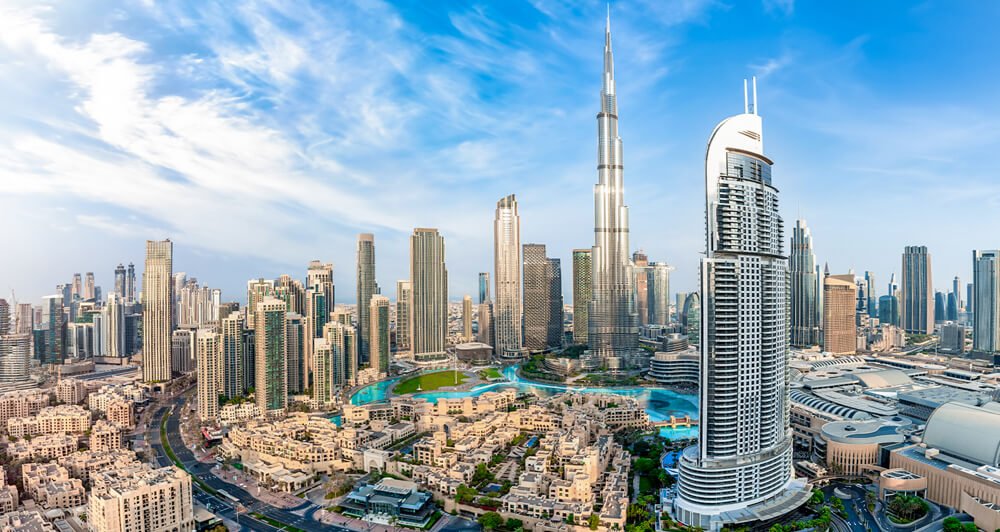
Continue to Downtown Dubai for the Dubai Mall and the Burj Khalifa area. Keep timed attractions several hours apart so one queue does not disrupt the next reservation.
The Visitor’s Verdict: Is the Experience Worth the Ticket Price?
At the current standard price of AED 169 for visitors aged four and above, value depends on expectations. The Museum of the Future is strongest as a cinematic, idea-driven attraction not as a historical collection.
Evaluating Value: Experiential Learning vs. Traditional Sightseeing
The ticket is worthwhile when you follow the narrative, interact with the displays, and allow two to three hours. Visitors interested only in photographs may find the exterior and accessible public areas sufficient.
Who is the Museum Best For? (Tech Enthusiasts, Families, and Visionaries)
It suits technology enthusiasts, families, students, educators, architecture fans, wellness travellers, creative professionals, and leaders exploring future trends. School-age children are likely to gain the most from the Future Heroes missions.
Conclusion: Walking Away with a New Perspective on Tomorrow
The Museum of the Future succeeds when it changes the question from “What will happen?” to “What should we help create?” Its architecture, multisensory storytelling and evolving innovation displays make it one of Dubai’s most distinctive indoor attractions.
Book with a plan – not at random. Select your preferred timed ticket through Things To Do UAE, allow two to three hours, arrive via Emirates Towers Metro and preserve time for the viewing deck, atrium and exterior photographs.
Things To Do UAE also lists optional private transfer or tour add-ons for travellers who prefer a coordinated Dubai itinerary.